Like Petrichor for Camels
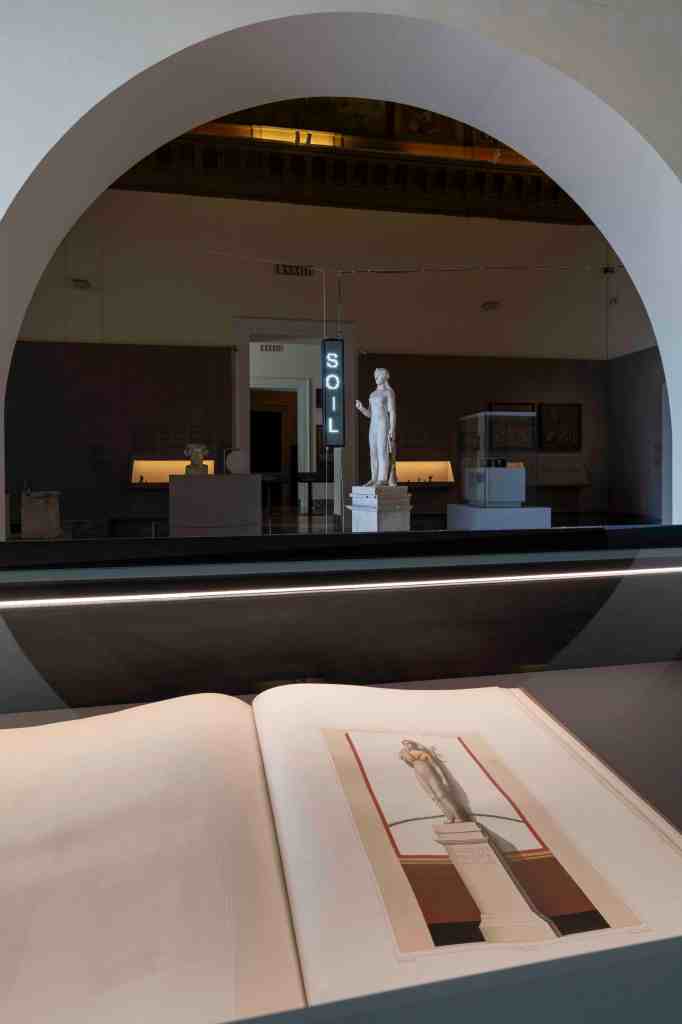
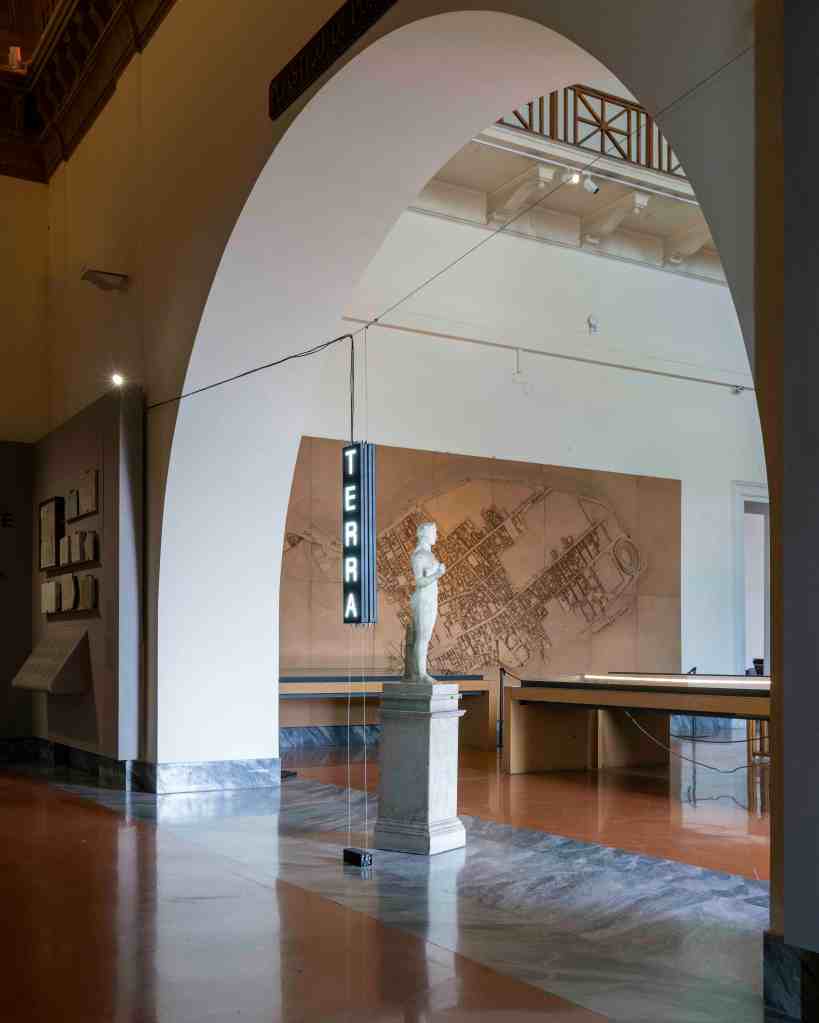
Installation: relocation of the statue of Isis, two 100x 40 cm LED signs, electric cables and steel cables.
ph: Amedeo Benestante
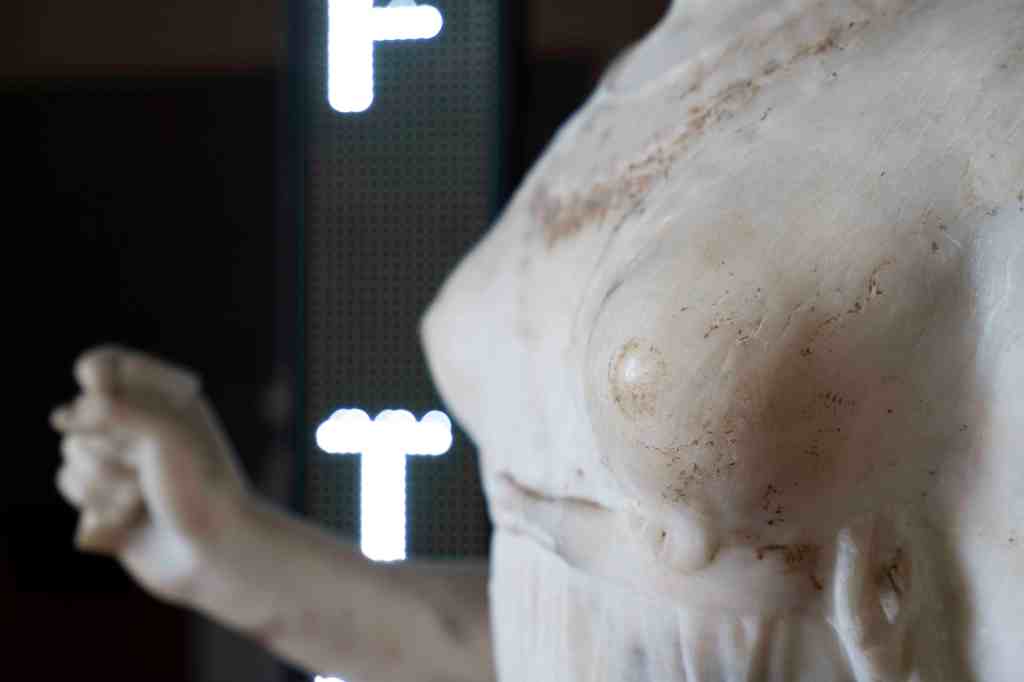
The installation relocates the statue of Isis to a central position in the museum, almost as if watching over the entrance to her temple and the model of Pompeii. The ankh, a sign of vital breath, is made palpable by invoking an olfactory sensation: the petricore. This smell is released when water from the rain melts the resin that envelops the seeds. A scent that camels smell at great distances and chase for kilometres in the desert.
The ankh is also a symbolic abstraction of the situla: a breast-shaped milk container, and from this reading the action in the public space begins.

ISIS STATUE
Inv. 967, MANN Room 83-96
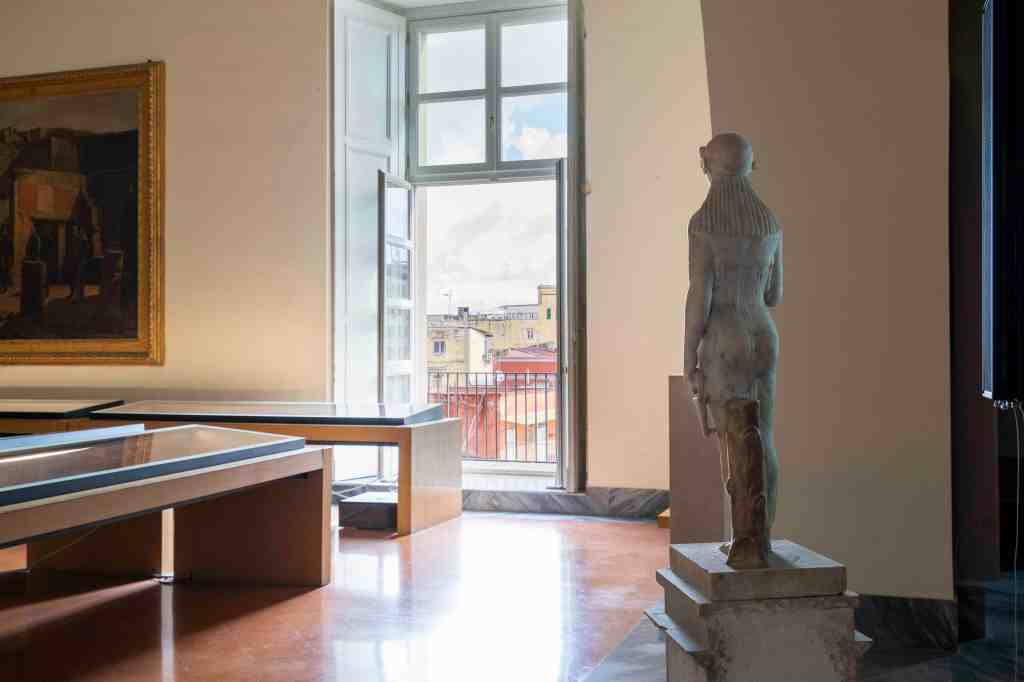
Marble statue, originally gilded and polychrome, depicting Isis standing with a sistrum (now missing) in her left hand and the ankh in her right. Found on 4 March 1766, in the north-west corner of the Temple portico.
The statue rests on a pillar with the dedicatory inscription of the freedman L. Caecilius Phoebus. In the representation, elements of archaic derivation, such as the hairstyle, the face with large eyes and the mouth built on the frontal axis, merge with Egyptian-inspired motifs, such as the setting of the figure, the prominence of the turgid forms under the transparent robes. The meticulous attention to detail and formal rigour indicate its execution in the Claudian period.
 IT'S RAINING GODS (& GODDESSES)